
2026 / FEATURED
Dermis — Skin for robots.
Programmable skin for robots that work beside people.
Dermis
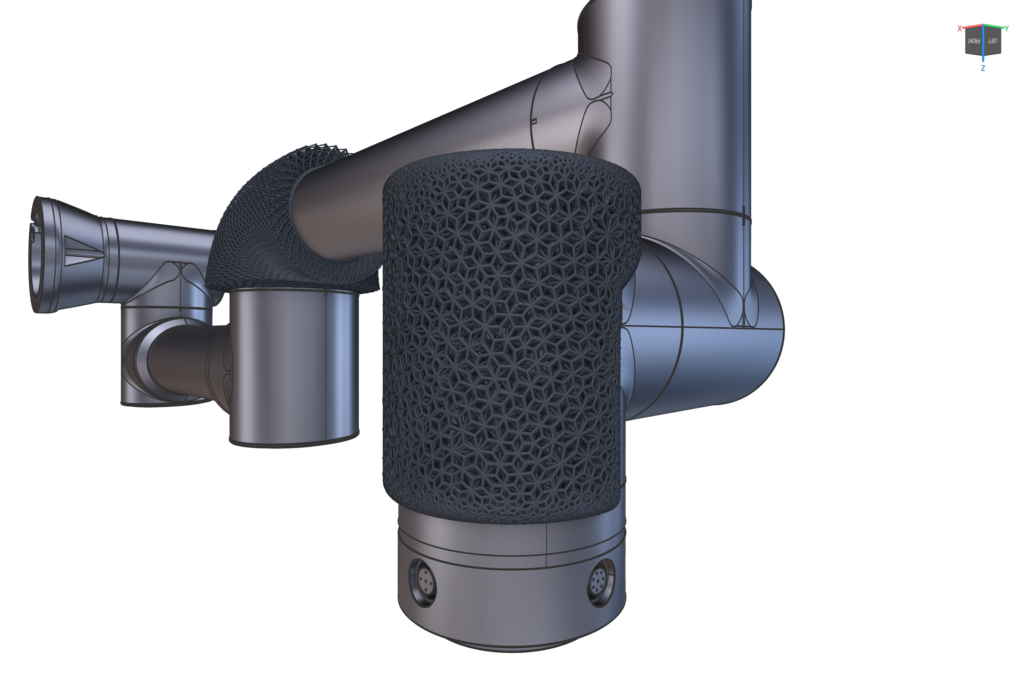
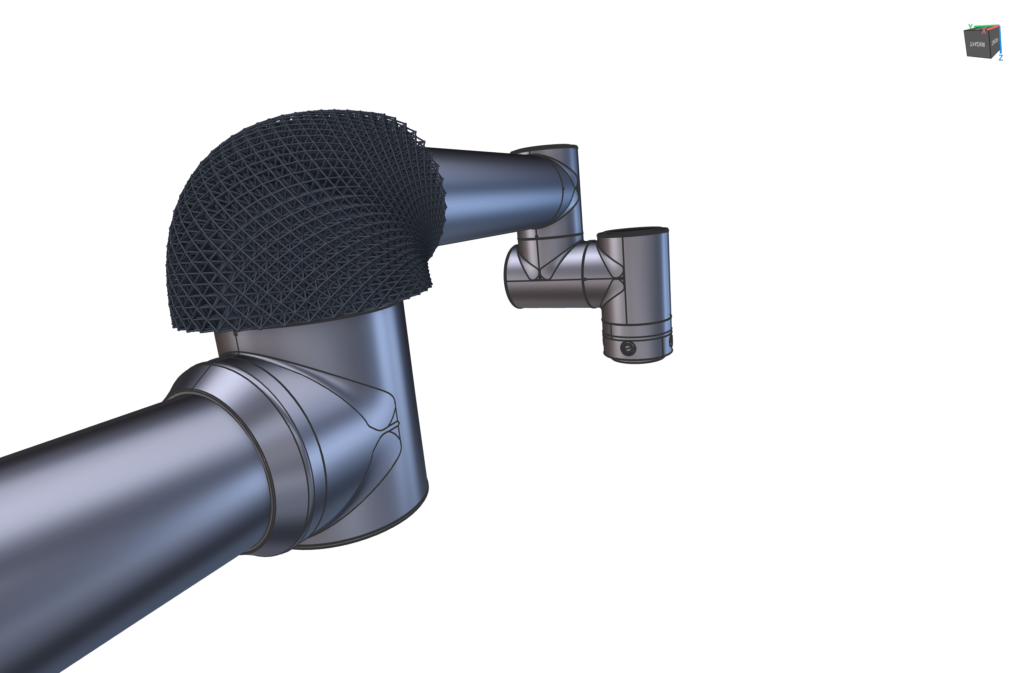
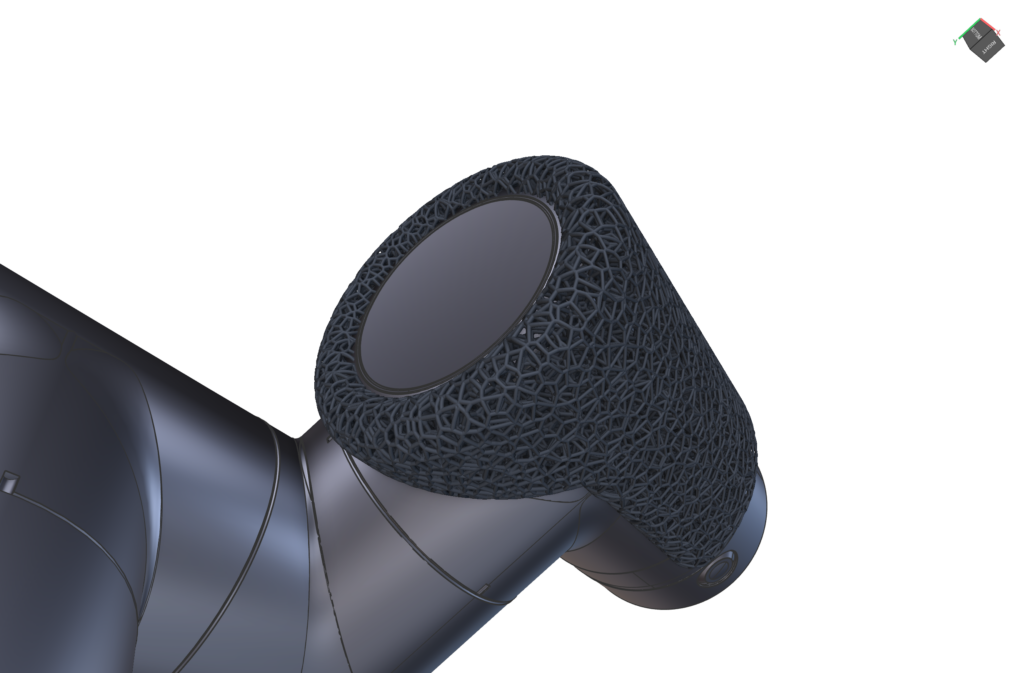
A lattice-structured elastomer add-on for the exterior of collaborative robots and humanoids. It spreads and absorbs impact energy over time, improving the safety of robots that work alongside people.
The challenge
Control alone cannot guarantee the intrinsic safety of a collaborative robot. In the tens of milliseconds before a sensor reacts, a rigid cover transmits contact energy straight to the human body. Meeting the permissible contact forces and pressures defined in ISO/TS 15066 requires physical cushioning at the moment of impact.
How Dermis works
Absorbs energy over time — The lattice buckles and recovers progressively, lowering peak impact force and extending contact time.
Fully programmable elasticity — Beam diameter and density are graded from surface to core, achieving multi-layer properties — soft on the surface, load-bearing in depth — in a single printed part.
Manufactured with Carbon DLS — Digital manufacturing in elastomer (EPU), reproducing zone-specific cushioning exactly as designed — impossible with conventional foam or urethane covers.
Perfect fit to the robot — Designed from the 3D models of joints and covers, with no gaps or interference and no loss of range of motion.
Features
- 3D Printed by Carbon DLS
- Trusted Elastomer Material
- Designed by Mikawa Industry Inc.
- Made in Japan
Compatible robots
Dermis supports robots from any manufacturer that provides 3D models. For robots without 3D models or still under development, we capture the geometry with our reverse engineering service and design and manufacture the optimal Dermis.
Process
- Receive the 3D model (or capture the geometry by reverse engineering)
- Define contact-risk zones and target cushioning characteristics
- Lattice design and simulation
- Manufacture with Carbon DLS and deliver
Contact us
To check compatibility with your robot, or to request samples and a quotation, feel free to contact us.