
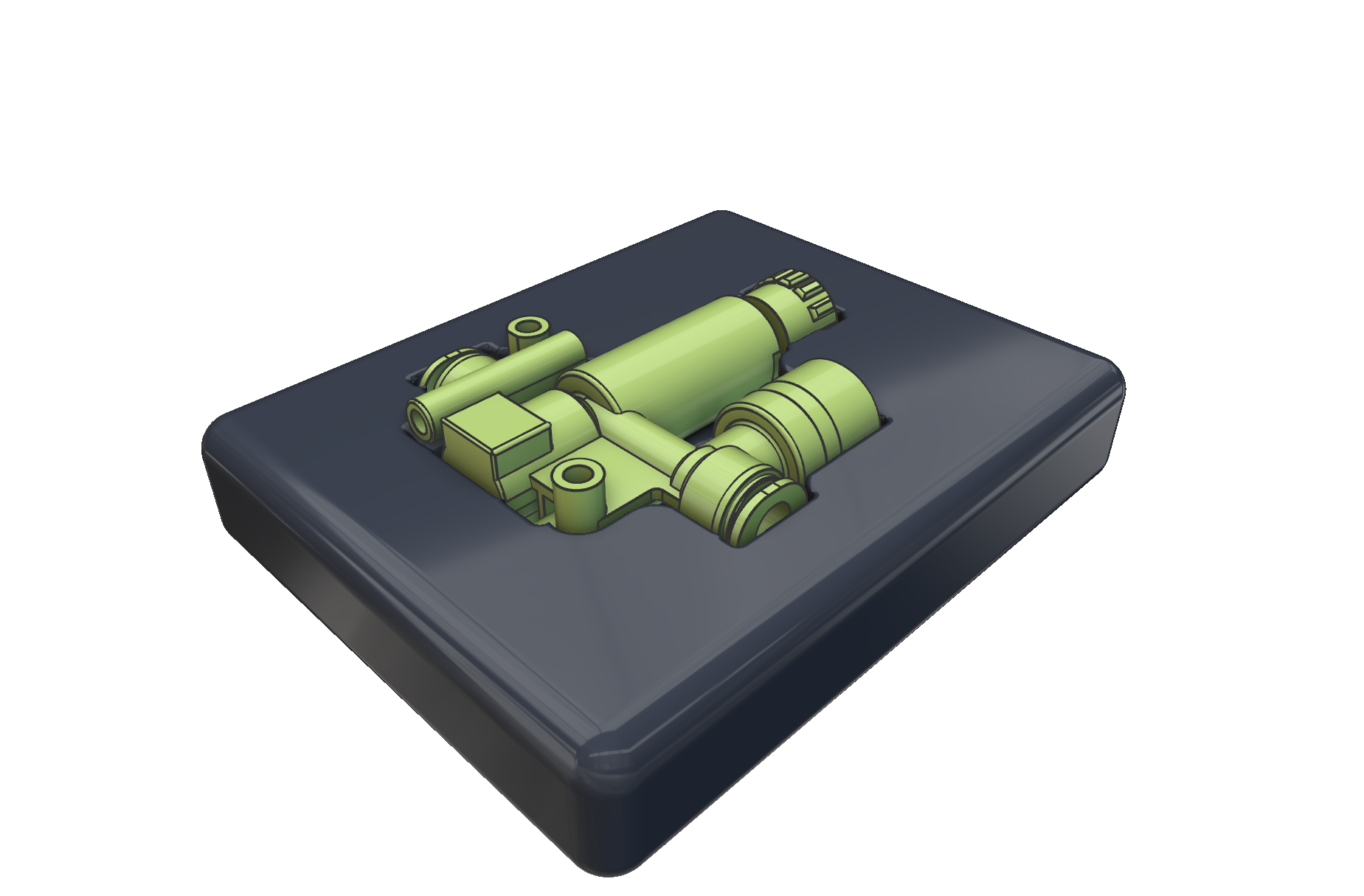
The workpiece builds its own nest. Nidus is a workpiece-specific nest fixture: the shape of the holding fixture is generated automatically from the workpiece’s 3D data and made by 3D printing.
Challenge
Fixture design and fabrication sets the schedule, in production launches and prototyping alike.
- Fixtures built from generic pins and blocks touch the workpiece at points, causing scratches and deformation.
- Machining a dedicated fixture takes weeks of design and cutting.
- Every time the workpiece changes, the work starts over.
How it works
01
Make it release in one direction
The shape of the workpiece is developed along a single pull direction, removing overhangs in that direction. People and robots alike can place and remove it without interference.
02
Support on surfaces
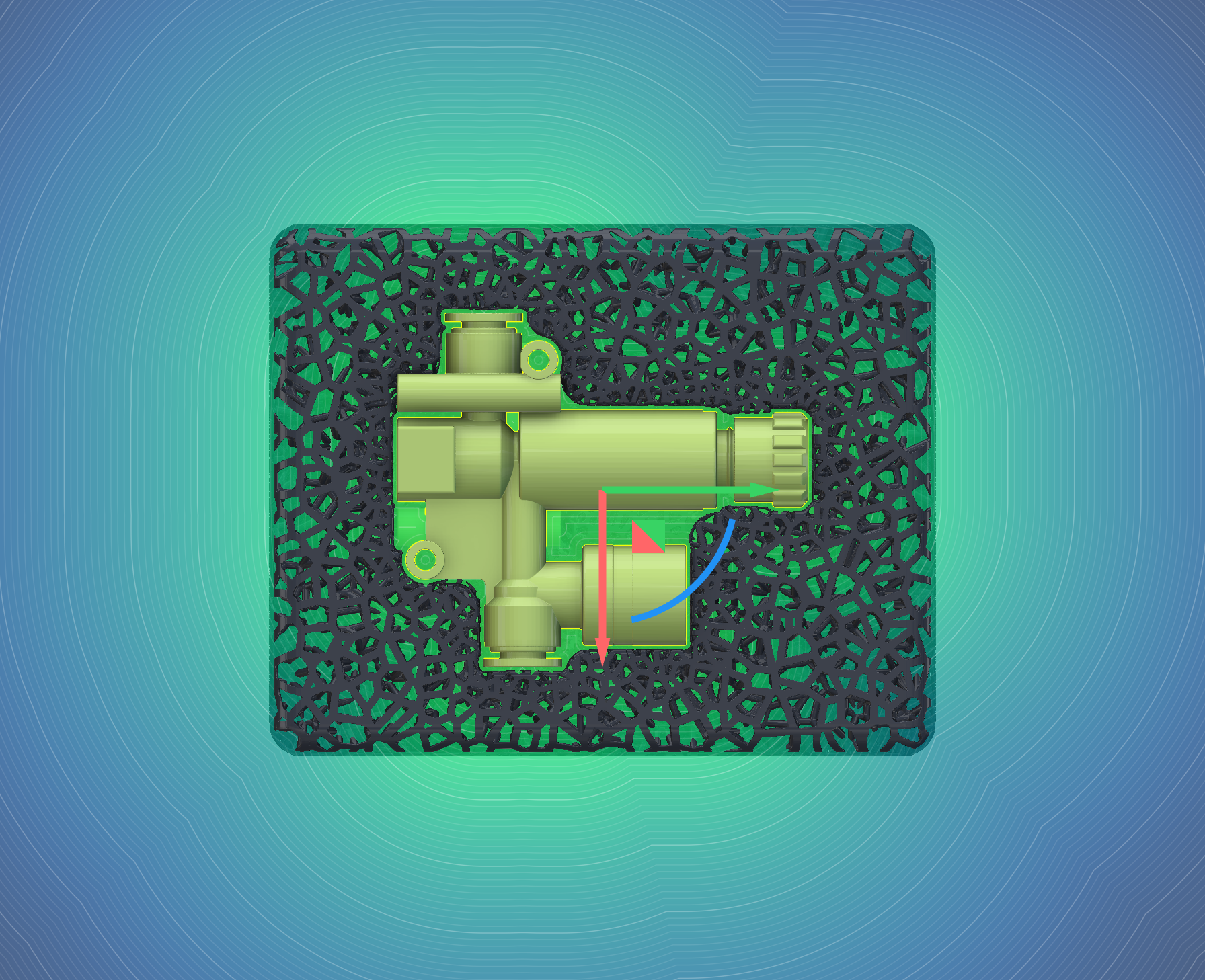
A wide contact area supports the workpiece and lowers local pressure, reducing scratches and deformation.
03
Choose rigid or elastomeric
Rigid for positioning that needs accuracy; elastomeric for workpieces sensitive to scratches or clamping load.
04
Vary elasticity with depth
The lattice is generated from the distance to the workpiece surface. The contact surface is soft; the deeper layer carries load.
05
Make it by 3D printing
Design through shipment is connected by digital data. No tooling and no machining.
Applications
- Infeed and outfeed nests for robot handling
- Measurement and inspection fixtures
- Holding during assembly, bonding and painting
- Transport trays and kitting for precision parts
Specifications
| Item | Item |
|---|---|
| Input | 3D data of the workpiece. If there is none, it is captured by reverse engineering |
| Material | Rigid or elastomeric, chosen to suit the application |
| Process | 3D printing |
| Dimensions | Generated for each workpiece |
| Design and manufacturing | Mikawa Industry (Japan) |
Talk to us
3D data of the workpiece, the application (transport, inspection, assembly and so on) and the quantity help us propose faster.